Flat 20% Off On All the orders | Use Code:SP10



Satin and sateen sound alike, but they are made differently. Satin is a weave that gives a glossy, slippery surface, usually in silk or polyester. Sateen is a cotton weave with a soft, silky sheen and a matte underside. For everyday bedding, sateen is usually the better choice: it feels smooth, breathes better, and is easier to wash.
The names cause most of the confusion. People hear satin and sateen and assume they are the same fabric with two spellings, or that sateen is simply a cheaper version of satin. In fact, the difference is in the weave, and the weave changes how the sheet feels against the skin, how warm it sleeps, and how it holds up in the wash. Knowing which weave you are buying helps you avoid a sheet that looks beautiful in the packet but feels wrong in bed.
A satin bedsheet is made with a satin weave, which puts most of the threads on the face of the fabric and leaves a glossy, slippery surface. The weave is what creates the shine, not necessarily the fibre, although satin sheets are often made from silk or polyester. The result is a sheet that looks luxurious, catches the light, and feels cool and smooth when you first lie on it.
That slippery feel is both the appeal and the drawback of satin. It can feel gentle on hair and skin, and it is often chosen for special occasions, guest rooms, and a more formal bedroom look. At the same time, a satin sheet can slide on the mattress, bunch up during the night, and feel warm if the fibre does not breathe well. Polyester satin in particular can trap heat, which makes it a poor match for warm rooms or for sleepers who move a lot.
Satin also tends to need gentler care. The smooth face can snag, and harsh washing can dull the shine over time. If you choose satin, expect to treat it more like a special-occasion sheet than an everyday workhorse, and always check the care label before washing.
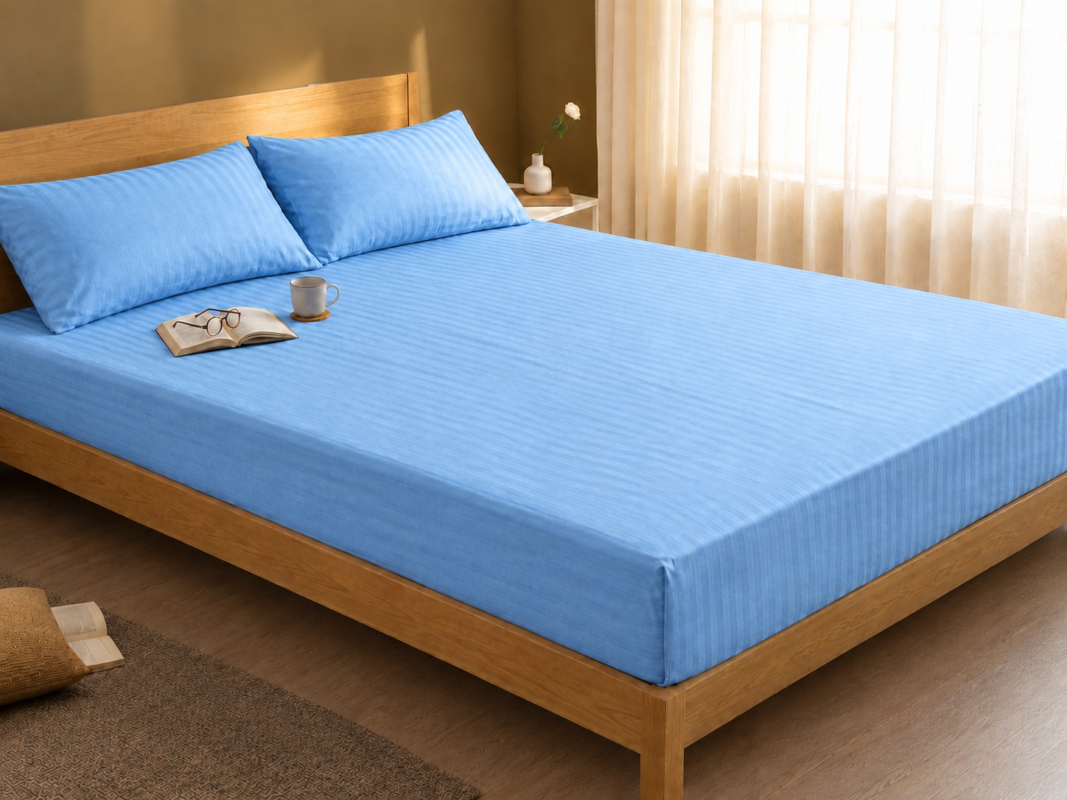
A sateen bedsheet is made with a sateen weave in cotton, which gives a smooth sheen on the face and a matte reverse. Sateen uses a weave similar in principle to satin, but because it is woven in cotton, the feel is softer and less slippery, with more grip and a warmer, more natural hand feel. It looks polished without the high gloss of a silk or polyester satin.
That balance is why sateen suits everyday bedding so well. It feels smooth and silky against the skin, yet it stays in place better than satin, drapes neatly over the mattress, and breathes better than most synthetic satins because cotton allows air to move through the fabric. A sateen sheet therefore feels comfortable across a wider range of nights, from mild evenings to cooler winter bedrooms with a duvet.
Many cotton sateen sheets are sold at thread counts such as 210 TC, which gives a smooth, dense feel without becoming heavy or stiff. You can explore the Bedsheets range, including the Delecacy Selene 210 TC Sateen Stripe Bedsheet in Muted Violet and the Delecacy Aroha 210 TC Sateen Stripe Bedsheet in Dusty Rose, to see how a cotton sateen weave looks and feels in a finished sheet.
Satin and sateen differ mainly in fibre and finish, even though both use a similar weave idea. Satin is a weave used with silk or polyester and gives a glossy, slippery face, while sateen is a cotton weave with a softer sheen and a matte underside. That fibre difference affects breathability, grip, washing, and how long the sheet keeps its look with regular use.
| Feature | Satin | Sateen |
|---|---|---|
| Weave | Satin weave, with most threads on the face | Sateen weave in cotton, with a smooth face and matte reverse |
| Usual fibre | Silk or polyester | Cotton |
| Feel | Very smooth and slippery | Smooth and silky, with more grip |
| Shine | High gloss | Soft, silky sheen |
| Breathability | Can feel warm, especially in polyester | Breathes better, thanks to cotton |
| Durability | Needs gentler handling; shine can dull | Handles regular use well |
| Care | Gentler wash, check the label | Machine wash on a gentle cycle at 30-40°C in most cases |
| Best for | Special occasions and a glossy look | Everyday comfort and easy care |
Cotton sateen is usually better for hot sleepers, because cotton breathes better than most satin fibres. A sateen sheet allows air to move, absorbs moisture more readily, and does not cling in the same way as a slippery synthetic satin. For warm nights, that breathability matters more than shine.
Satin can feel cool at first touch, which can be misleading. A silk satin may stay comfortable, but a polyester satin can quickly feel warm and clammy once you are under the covers, because it does not breathe as well. If you often wake up warm, or you sleep in a warm room, choose a cotton sateen sheet and pair it with light, breathable bedding rather than a heavy satin set.
Sateen usually lasts longer with regular washing, because cotton sateen handles machine washing better than satin. A sateen sheet can be washed on a gentle cycle at 30-40°C, with a mild detergent, and it keeps its smooth feel through many washes when you follow the care label. That makes it a practical choice for beds that are used every night.
Satin needs gentler care and can show wear sooner. Its glossy face can snag, pill, or lose shine if it is washed too hot, spun too hard, or washed with harsh detergents. Silk satin in particular needs careful handling, and polyester satin can also dull over time. If you want a sheet you can wash weekly without worrying, sateen is the safer, longer-lasting choice for everyday use.
Choose sateen for everyday comfort and easy care, and choose satin for special-occasion gloss. Start with how you sleep: if you sleep warm, move a lot, or wash your sheets often, sateen will be more comfortable and more practical. If you want a dramatic, glossy look for a guest room or a special night, and you are happy to wash the sheet gently, satin can give you that look.
Next, check the size and fit. Common sizes include king at 180 x 200 cm and super king at 200 x 200 cm, and you should match the sheet to your mattress depth as well as its length and width. A fitted sheet has elasticated corners that grip the mattress and stay in place, while a flat sheet lies over the mattress and can be tucked in. A fitted sateen sheet is often the easiest everyday option, because it combines a smooth cotton feel with a secure fit.
Finally, check the fibre and thread count on the label rather than relying on the name alone. A cotton sateen sheet at a common thread count such as 210 TC will feel smooth and substantial, while a satin sheet should state whether it is silk, polyester, or a blend, so you know how it will breathe and how to wash it. Buy the sheet that matches your sleep, your washing routine, and your bedroom, not just the one that shines brightest in the packet.
No; satin is a weave used with silk or polyester, while sateen is a cotton weave with a similar sheen but a softer, more breathable feel.
Yes; cotton sateen is smooth, durable, and easier to wash than satin.
It feels smooth and silky, but with more grip and a matte underside, so it stays in place better.
Machine wash on a gentle cycle at 30-40°C, avoid bleach, and line dry or tumble dry on low.