
How often should you wash your bedsheets? Once a week. Most people should wash their bedsheets once a week. That weekly rhythm keeps sweat, skin cells, body oils and dust mites from building up, keeps sheets feeling fresh, and is easy to maintain. Some households need a shorter cycle, and a few can stretch a little longer, but once a week is the safest default for adults, children and allergy sufferers alike.
For most adults, once a week is the right answer to how often should you wash your bedsheets. You spend roughly seven to nine hours a night in bed, and during that time your sheets collect sweat, natural skin oils, shed skin cells and any lotions or hair products left on your skin. Over a week that build-up becomes noticeable, even if the sheets still look clean. Washing weekly resets the fabric before odours or dullness set in, and it helps people with sensitive skin or mild allergies sleep more comfortably. If you shower in the morning and sleep in clean nightwear, your sheets may stay fresher for longer, but the weekly wash is still a sensible habit. Think of it as regular maintenance, like changing a towel, rather than a chore you only do when sheets look dirty. A fresh set also simply feels better: crisp, cool and clean against the skin, which can make it easier to settle at night.
Yes, the season matters. In hot, humid weather you sweat more at night, so sheets can feel damp or stale sooner. In that case, washing every three to five days may feel more comfortable, especially if you sleep without air conditioning or use a heavier duvet. In cooler weather, when you sweat less and wear warmer nightwear, a weekly wash is usually plenty. The same applies to bedrooms that stay warm through central heating in winter: dry, heated air can leave skin flakier, so sheets may need the same weekly wash even though you feel less sweaty. The rule is simple: the warmer and more humid the night, the sooner the sheets need washing. If your pillowcase feels oily or smells stale before the week is out, wash the full set rather than waiting for wash day.
Children, pets and allergy sufferers usually need more frequent washing. Children can spill drinks, bring crumbs to bed and sweat heavily during growth spurts or fevers, so their sheets often need washing twice a week, and immediately after any illness or accident. If a pet sleeps on the bed, pet hair, dander and outdoor dirt transfer straight to the sheets, so a wash every three to four days keeps the bed hygienic and reduces allergens. Allergy sufferers benefit from weekly washing at 60 degrees Celsius where the fabric care label allows it, because heat helps remove dust mites and pollen that settle in bedding. Wash pillowcases even more often than sheets if you have allergies, since your face rests directly on them all night. For anyone with eczema or sensitive skin, a gentle, fragrance-free detergent and a thorough rinse matter as much as frequency, because detergent residue can irritate skin just as much as a dirty sheet.
Your sheets will usually tell you before the calendar does. A stale or musty smell, even after airing the bed, is the clearest sign. Visible marks, yellowing on pillowcases, or a slightly greasy feel also mean wash day has arrived early. If you wake up sneezing, with itchy skin or a blocked nose, dirty bedding may be contributing, especially in dusty or pollen-heavy seasons. After illness, night sweats or a hot, restless night, wash the sheets straight away rather than waiting. The same goes after guests have used a spare bed: always wash guest sheets after each stay, even if the bed was only used for one night. Keeping a second set of sheets makes this easy, because you can change the bed immediately and wash the used set when convenient, instead of waiting for a wash cycle to finish.
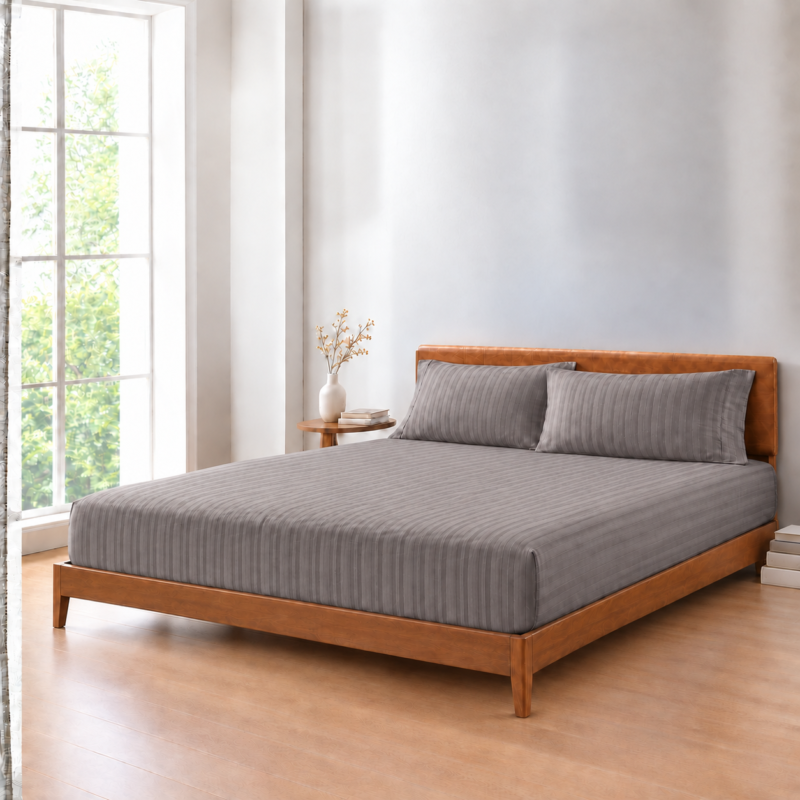
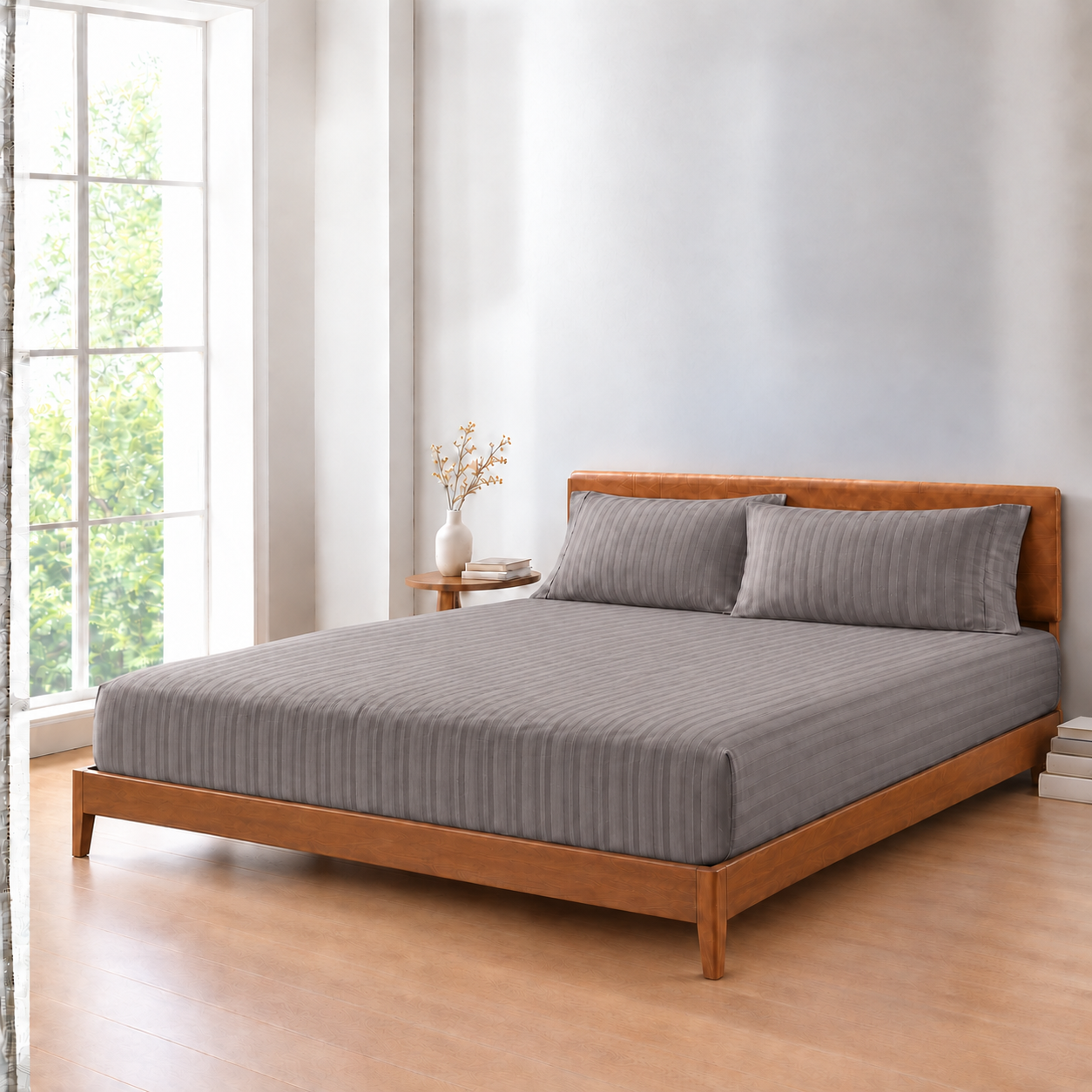
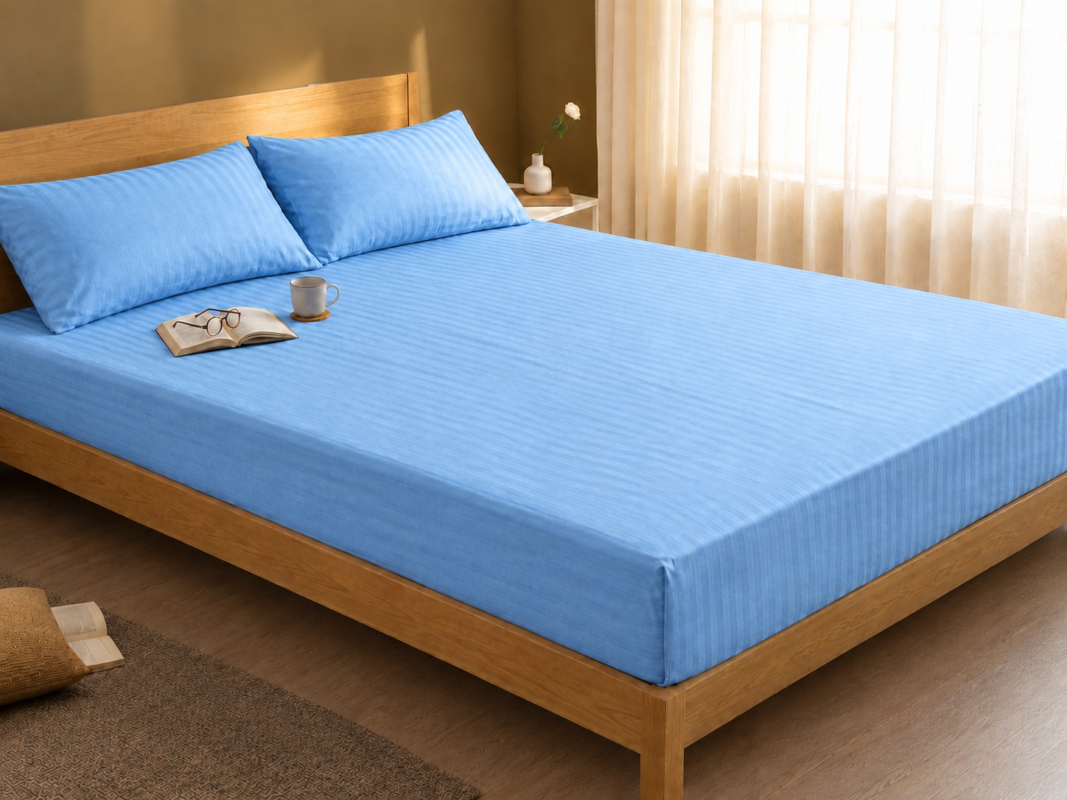
Start by checking the care label, because thread count, fibre and weave change the right settings. Most cotton and cotton-blend sheets wash well at 40 degrees Celsius, while white cotton sheets can usually handle 60 degrees Celsius for a deeper clean. Use a normal cycle with a good-quality detergent, and avoid overloading the machine: sheets need room to move so water and detergent reach every part of the fabric. Wash sheets separately from towels and heavy items, which can tangle around them and leave them less clean. Skip fabric softener on most sheets, because it can coat fibres and reduce breathability over time. If your sheets are a sateen weave, such as the Selene 210 TC Sateen Stripe Bedsheet and the Nivara 210 TC Sateen Stripe Bedsheet from the Delecacy Bedsheets collection, a gentle cycle and a cool iron or a shake-out before hanging will help keep the smooth finish looking its best. Always wash new sheets before first use to remove any finishing residues from manufacturing.
How you dry sheets affects how fresh they stay. Line drying outdoors, where possible, gives sheets a naturally fresh smell and helps sunlight freshen white fabrics. If you use a tumble dryer, use a medium heat and remove sheets while slightly damp, then shake them out and fold promptly to reduce creasing. Avoid leaving damp sheets balled up in the machine, because that is how musty smells start. For storage, fold sheets neatly and store them in a cool, dry place with good airflow, away from direct damp. A pillowcase bundle, where the folded sheet set is tucked inside one of its own pillowcases, keeps sets together and stops single pillowcases going missing. Rotate between two or three sets so no single set is washed to exhaustion, and wash stored spare sheets every few months if they have sat unused, so they smell fresh when you need them.
Use these concrete numbers as a guide. Recommended wash temperature: 40 degrees Celsius for most coloured sheets, 60 degrees Celsius for white cotton and for allergy households where the label allows it. Typical wash cycle: normal or cotton cycle, 45 to 90 minutes depending on the machine. Drying: line dry for 2 to 4 hours in good airflow, or tumble dry on medium heat for 40 to 60 minutes. Sheet sizes to know when buying a second set: single 90 x 190 cm, double 137 x 191 cm, king 180 x 200 cm, super king 200 x 200 cm. Thread count context: a 210 thread count sateen sheet offers a smooth, soft feel for everyday use, while higher counts feel denser and may need longer drying times. Pillowcase tip: change pillowcases twice a week if you have oily skin, acne-prone skin or allergies, even when the full sheet set is washed weekly.
| Household | Recommended frequency |
|---|---|
| Single adult, no pets | Once a week |
| Couple, no pets | Once a week |
| Household with a pet on the bed | Every 3 to 4 days |
| Child’s bed | Twice a week, and after illness |
| Allergy sufferer | Once a week at 60 degrees Celsius where allowed, pillowcases twice a week |
| Hot or humid climate | Every 3 to 5 days |
| Guest bed | After every stay |
You can, but it is not ideal. After two weeks, sweat, oils and dust mites build up noticeably, and sheets may smell stale even if they look clean. Weekly washing is a better default for most people.
Yes, especially if you have oily skin or allergies. Pillowcases collect facial oils and hair products directly, so changing them twice a week keeps your sleeping surface fresher between full sheet washes.
Not if the care label allows it. White cotton sheets usually cope well at 60 degrees, but coloured or delicate sheets should stay at 40 degrees to protect colour and fibre.
Two or three sets are ideal. One set on the bed, one in the wash or ready to use, and one spare means you can change the bed immediately without waiting for laundry day.
Washing your bedsheets once a week is a small habit with a clear payoff: a fresher bed, healthier skin and better sleep. Adjust the rhythm for pets, children, allergies and hot weather, keep a spare set ready, and let the weekly wash become part of your routine rather than something you put off.