Flat 20% Off On All the orders | Use Code:SP10



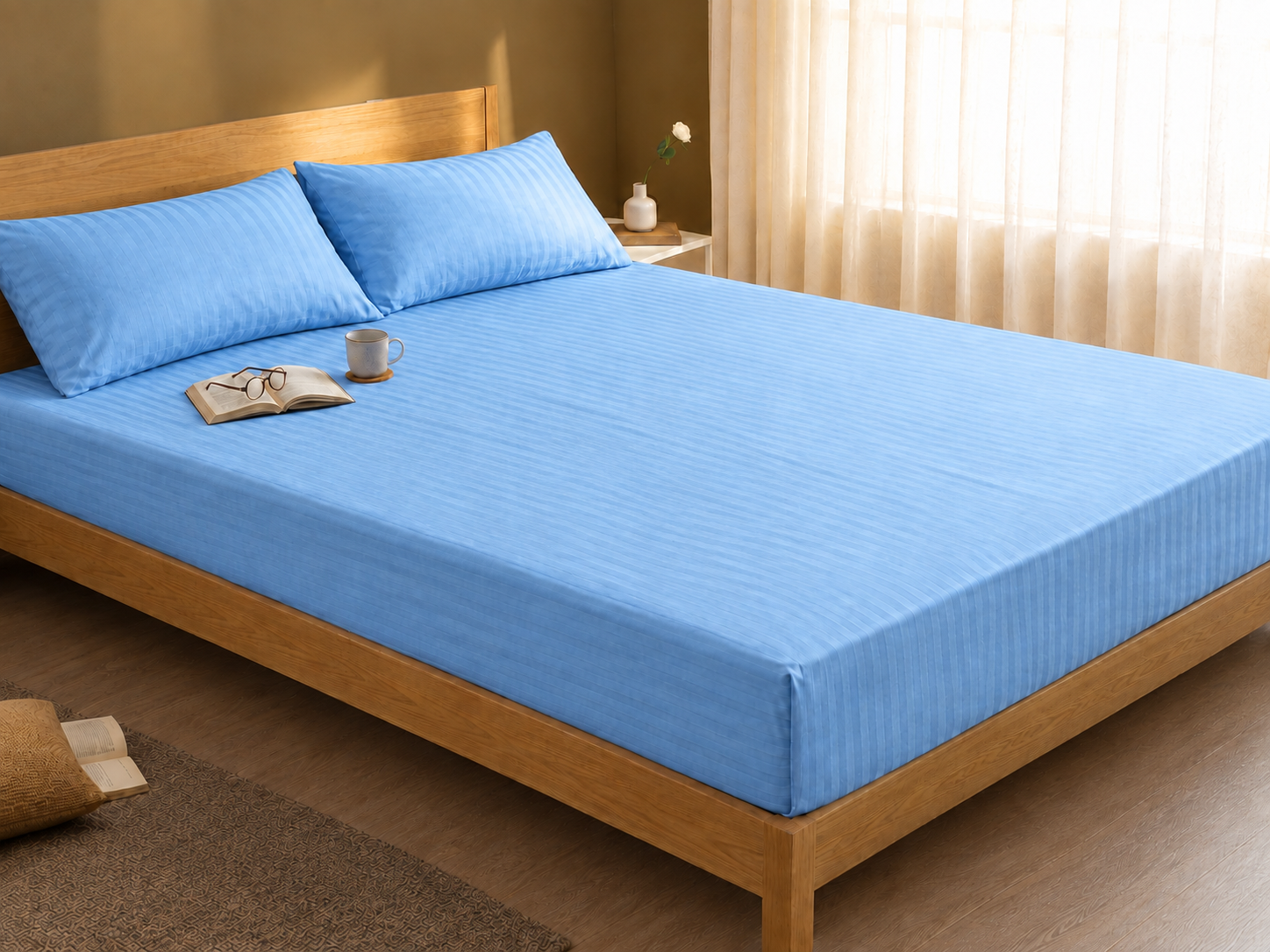
Choose a fitted sheet if you want a sheet that stays in place, and a flat sheet if you want a light top layer you can fold back. Most sleepers do best with both: a fitted sheet protects the mattress and stays put, while a flat sheet adds a breathable layer between you and the duvet.
A fitted sheet is a sheet with elasticated corners that stretch over the mattress and tuck underneath it. The elastic holds the sheet in place, so it does not bunch up or slide off during the night. Fitted sheets are measured by mattress size plus pocket depth, which is the thickness of the mattress including any topper. A sheet with a pocket depth of 25-30 cm fits most standard mattresses, while deeper mattresses and thick toppers need a deep-pocket sheet of 35-40 cm. Because the sheet wraps the mattress, it also gives a smooth, neat sleeping surface.
A flat sheet is a simple rectangular sheet with no elastic. It is laid over the mattress and tucked in at the sides and foot of the bed, hospital-corner style, or used as a top sheet over the sleeper and under a duvet or blanket. Flat sheets are popular in warmer weather, when a full duvet feels too heavy, and in guest rooms, where a fresh top sheet makes the bed feel clean and finished. They are also easy to fold, iron, and store, because they have no elastic corners to work around.
A fitted sheet stays in place better, because its elastic corners grip the mattress on all four sides. This matters most for restless sleepers, children, and anyone who finds a loose sheet annoying at night. A flat sheet used as a bottom sheet can slip, especially on a smooth mattress protector or a mattress with rounded corners. If you prefer a flat sheet underneath, tuck it firmly and re-tuck the sides when you make the bed, or choose a flat sheet that is one size larger than the mattress so there is extra fabric to tuck in securely.
A flat sheet is easier to wash, dry, and fold. It lies flat in the machine, dries evenly, and folds into a neat rectangle for storage. A fitted sheet needs a little more care: its elastic corners can bunch in the wash, and folding it neatly takes practice, though the bundle method — tucking corners into each other and folding the rectangle that remains — makes it quick once learned. Both types wash well at 30-40°C with a normal detergent dose, and both should be dried fully before storage to avoid musty smells.
A fitted sheet suits a deep mattress best, as long as you match the pocket depth to the mattress. Measure the mattress from the top surface to the underside, including any topper, and choose a pocket depth at least 2-3 cm larger than that measurement so the elastic sits comfortably underneath. A flat sheet can work on any mattress depth because it is simply tucked in, but on a very deep mattress you may need a larger flat sheet to get enough tuck-in fabric. For guest beds with different mattress depths, flat sheets are the more flexible choice.
Yes, and this is the most common setup. Use a fitted sheet on the mattress, then add a flat sheet on top as a top sheet, followed by a duvet or blanket. This layering keeps the duvet cleaner, because the flat sheet takes most of the nightly wear and is easy to wash, and it lets hot sleepers push the duvet aside and sleep under just the flat sheet. In summer, many people skip the duvet entirely and sleep under a single flat sheet, which feels cool and light while still giving a covered feeling.
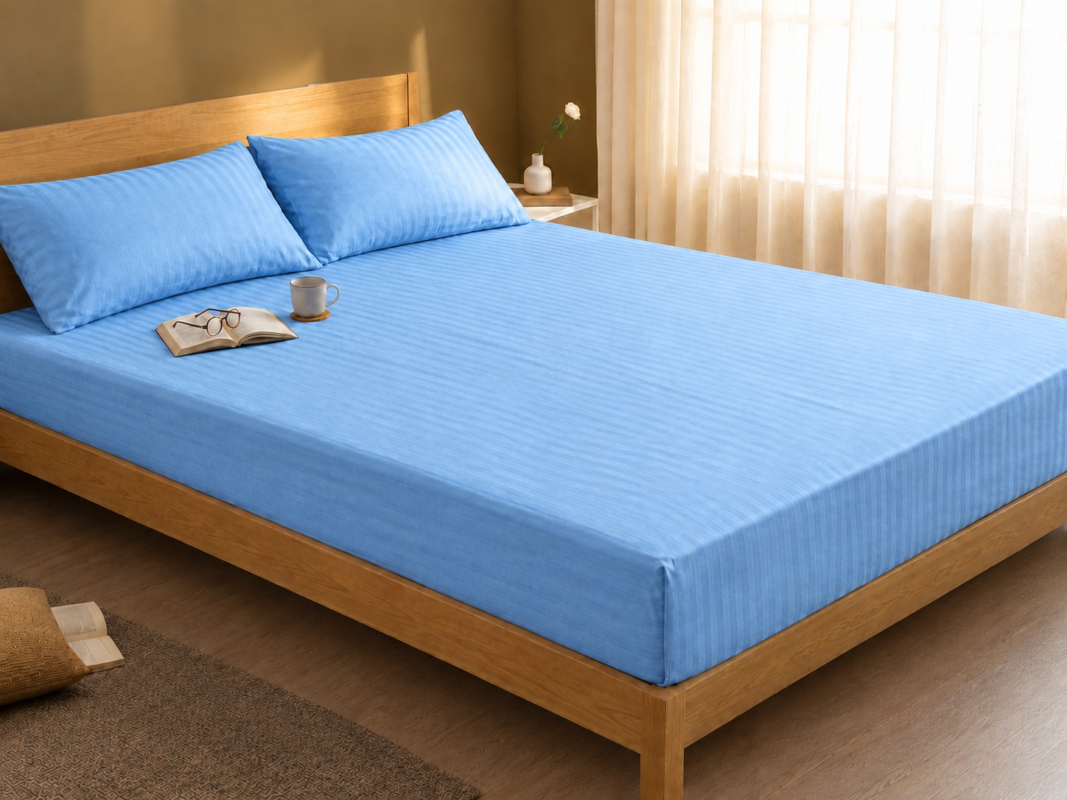
Common mattress sizes: single 90 x 190 cm, double 135 x 190 cm, king 180 x 200 cm, super king 200 x 200 cm. Standard pocket depth: 25-30 cm; deep-pocket fitted sheets: 35-40 cm. Measure pocket depth with any topper included, and allow 2-3 cm extra for a comfortable fit. Everyday wash temperature for cotton and sateen sheets: 30-40°C; dry fully before storing. Example fabric: 210 thread count sateen stripe sheets give a smooth feel with a soft sheen, and suit sleepers who like a silky surface without a slippery finish.
| Feature | Fitted sheet | Flat sheet |
|---|---|---|
| How it fits | Elastic corners grip the mattress | Tucked in by hand at sides and foot |
| Stays in place | Excellent, even for restless sleepers | Good if tucked firmly, can slip |
| Easiest use | Bottom sheet, every night | Top sheet, summer cover, or guest bed layer |
| Washing and folding | Needs corner-tuck folding | Folds flat, dries evenly |
| Deep mattresses | Needs matching pocket depth | Flexible, but needs extra size for tucking |
| Cost and storage | Similar price, bulkier to fold | Similar price, stores flat and neat |
Browse the Bedsheets category, including the Selene 210 TC Sateen Stripe Bedsheet and the Nivara 210 TC Sateen Stripe Bedsheet.
No, but most sleepers prefer both. A fitted sheet alone is enough for a neat bed, while adding a flat sheet gives a washable top layer and a cooler option for warm nights.
Measure the mattress length, width, and depth including any topper. Match the length and width to the sheet size, and choose a pocket depth 2-3 cm larger than the mattress depth.
The pocket depth is usually too shallow for the mattress, or the elastic has worn out. Measure the mattress with its topper and choose a deeper pocket, and replace sheets whose elastic no longer grips firmly.
Yes, as a top layer. A flat sheet on its own feels much cooler than a duvet, and hot sleepers can use it alone in summer or fold it back when they get warm at night.