Flat 20% Off On All the orders | Use Code:SP10



To remove stains from bedsheets safely, act fast: blot the mark, rinse with cold water, and treat it with a small amount of mild liquid detergent before washing at 30–40°C. Never use hot water on a fresh stain, and never rub it — rubbing pushes the stain deeper into the weave and can damage the fabric.
You can remove stains from bedsheets safely by treating the mark before it dries and washing gently afterwards. The golden rule is simple: cold water first, mild detergent, and no harsh scrubbing. Most everyday stains — sweat, body oils, tea, coffee — come out with this routine, while tougher marks like blood or grease need one extra step before the wash.
Start by scraping off any solid residue with a blunt spoon, then blot — never rub — with a clean white cloth. Rinse the stained area under cold running water from the back of the fabric, so the water pushes the stain out rather than through the sheet. Apply a small amount of mild liquid detergent directly to the mark, work it in gently with your fingertips, and leave it for 10 to 15 minutes before washing.
Act quickly, because a fresh stain is far easier to lift than one that has dried and set. First, identify what caused the stain, since the treatment depends on it: protein stains such as blood and sweat react badly to heat, while greasy marks need detergent to break them down.
Check the care label on your bedsheet before you use any product. Cotton and cotton-blend sheets are the most forgiving, while sateen weaves — such as a 210 TC sateen stripe bedsheet — need a gentler touch, because harsh rubbing can dull the smooth finish. If you are unsure, test any treatment on a hidden corner of the sheet first.
Use cold water for blood, sweat, and dairy stains, and lukewarm water for most others. Heat sets protein stains permanently, so a blood mark rinsed in hot water may never come out. Grease, chocolate, and makeup respond better to lukewarm water, which helps the detergent dissolve the oils.
As a rule of thumb, start every stain with cold water. If the mark is greasy and the cold rinse does not shift it, move to lukewarm water — around 30°C — with detergent. Never use water hotter than 40°C on a stained sheet until the mark is gone, because heat can lock the stain into the fibres.
Different stains need different first steps. The table below covers the marks most often found on bedsheets, with the safest treatment for each.
| Stain | First step | Treatment | Avoid |
|---|---|---|---|
| Blood | Rinse under cold water at once | Mild detergent, soak up to 30 minutes | Hot water, which sets the stain |
| Sweat and body oils | Rinse in cold water | Detergent pre-treat, wash at 40°C | Drying before washing |
| Coffee and tea | Blot, then rinse cold | Detergent, or one part white vinegar to three parts water | Rubbing the mark |
| Food and grease | Scrape off solids | Detergent on the mark, leave 15 minutes | Washing without pre-treating |
| Makeup and sunscreen | Blot gently | Detergent, lukewarm rinse | Harsh scrubbing on sateen |
| Grass or mud | Let mud dry, brush off | Cold soak, then detergent wash | Rubbing wet mud into the weave |
For sweat marks and yellowing around the pillow area, a pre-wash soak helps more than a stronger detergent. Soak the sheet in cold water with a small amount of mild detergent for 20 to 30 minutes, then wash as usual. If the yellowing is old, repeat the soak and wash once more rather than reaching for a harsh product — two gentle rounds lift more stain than one aggressive one.
Avoid chlorine bleach on coloured or sateen bedsheets — it weakens cotton fibres, fades colour, and can damage the smooth sateen finish. On plain white cotton sheets, a small amount of oxygen-based bleach is a gentler option, but always follow the care label and dilute it exactly as directed.
For white sheets that look dull, sunlight is a kinder brightener: line-dry white cotton sheets in the sun, which naturally lifts mild yellowing without chemicals. Coloured sheets should dry in the shade to protect their colour.
Old stains need patience rather than stronger chemicals. Soak the sheet in cold water with mild detergent for up to 30 minutes, then treat the mark again and wash at 40°C. Repeat the cycle once more if the stain has faded but not gone — two gentle rounds beat one harsh one.
If a stain survives two washes, do not tumble-dry the sheet: dryer heat sets whatever is left. Instead, air-dry it and try one more cold soak and wash. Some very old marks, such as a blood stain that was washed in hot water months ago, may never fully disappear — at that point the honest choice is to live with a faint shadow or keep the sheet as a spare.
Wash treated sheets at 30–40°C on a gentle or normal cycle, with a mild detergent and no fabric softener — softener coats the fibres and can trap residue. Wash sheets on their own or with similar light items, so they have room to move and rinse clean.
Check the stain before drying: if it is still visible, treat and wash again rather than drying. Heat from a dryer or hot iron sets a stain, so only dry the sheet once the mark is gone. Line-drying in fresh air also helps remove any lingering smell.
Change and wash your sheets weekly, so sweat and body oils never get the chance to build up and yellow the fabric. Keep a spare set in rotation: a sheet that is washed promptly lasts longer and stays brighter than one left on the bed for weeks.
Protecting the mattress helps too — a washable mattress protector catches spills before they reach the sheet. And keep drinks, makeup, and lotions away from the bed where you can: most bedsheet stains start as small spills that were left to dry overnight. A well-chosen sheet also matters: a smooth 210 TC sateen bedsheet in a light colour shows marks early, so you catch and treat them while they are still fresh.
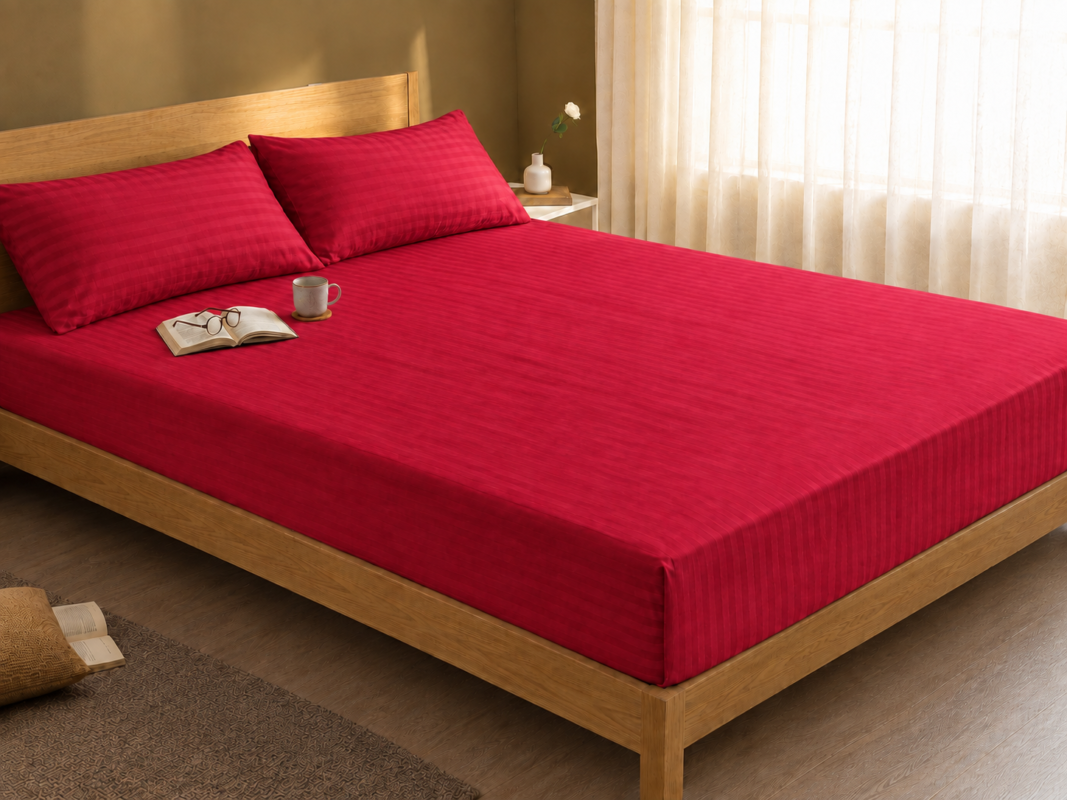
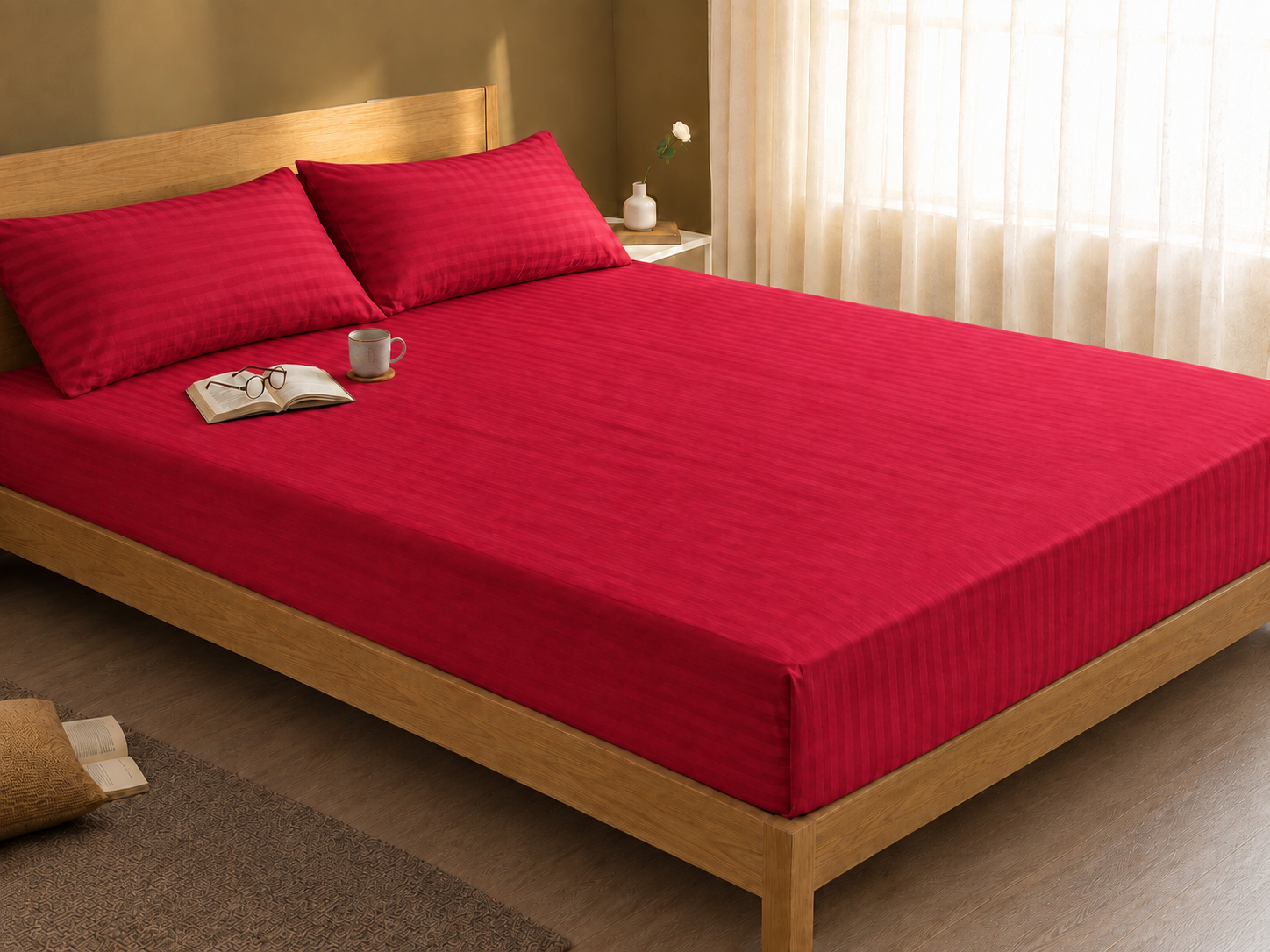
If you are choosing new sheets, browse the Delecacy Bedsheets collection for cotton and sateen sheets in sizes from single to super king. Two smooth sateen options that show marks early, so stains get caught while they are fresh, are the Selene 210 TC Sateen Stripe Bedsheet and the Nivara 210 TC Sateen Stripe Bedsheet.
Yes, if you act fast. Rinse the stain under cold running water straight away, apply mild liquid detergent, leave it for 15 minutes, then wash at 30–40°C. Never use hot water on blood — heat sets the stain permanently.
A mild liquid detergent is safe on 210 TC sateen if you apply it gently and do not scrub. Avoid chlorine bleach and harsh stain removers, which can dull the smooth sateen finish and weaken the fibres.
Soak for 10 to 30 minutes in cold water with a small amount of mild detergent. Longer soaking does not lift more stain and can weaken cotton fibres, so keep it short and wash afterwards.
Treat the mark again and wash a second time at 30–40°C — but do not tumble-dry the sheet first, because dryer heat sets the stain. If it survives two gentle cycles, air-dry and accept a faint mark, or keep the sheet as a spare.