Flat 20% Off On All the orders | Use Code:SP10



Percale vs sateen bedsheets differ in weave, not fibre: percale is a plain, one-over-one weave that feels crisp and cool, while sateen is a satin weave that feels smooth and slightly warmer. If you sleep hot, percale usually sleeps cooler; if you like a soft, silky drape, sateen is the better pick.
Both weaves can be made from the same cotton, so the difference is not the fibre — it is how the threads cross on the loom. That one choice changes the feel, the temperature, the drape, and even how the sheet ages over years of washing. This guide compares percale and sateen side by side — weave, feel, warmth, durability and care — so you can choose the sheet that suits your sleep, your season and your bed.
Percale vs sateen bedsheets differ in weave: percale uses a plain weave, with one thread over and one under, while sateen uses a satin weave, with more threads floating on the surface. That is why percale feels crisp and matte, and sateen feels smooth with a soft sheen.
Think of percale as a simple grid: every weft thread passes alternately over and under each warp thread. The result is a tight, even fabric with a dry, cool hand feel. Sateen works differently: the weft threads float over three or four warp threads before diving under one, so more thread sits on the surface. That floating surface is what gives sateen its smooth touch and gentle shine.
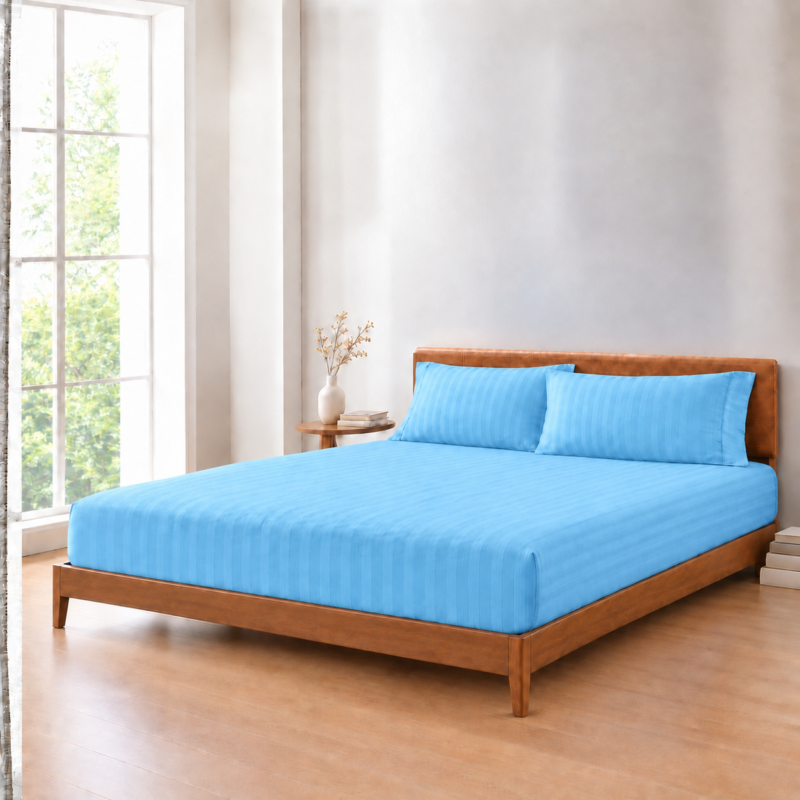
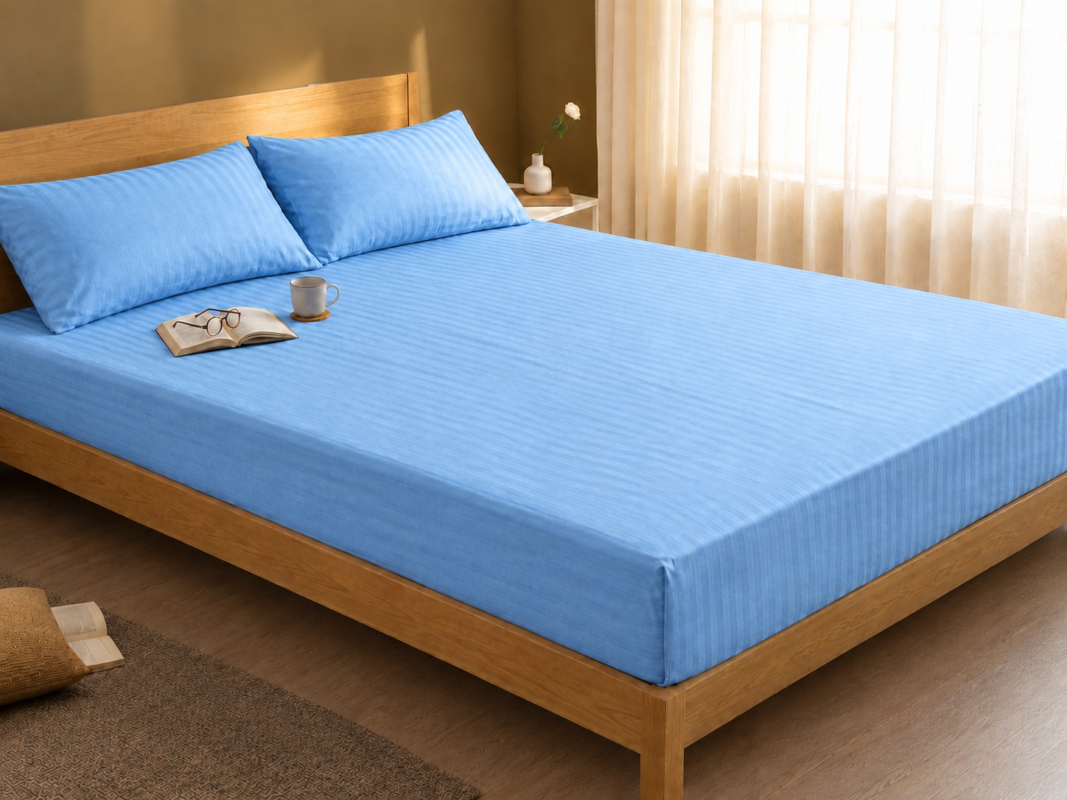
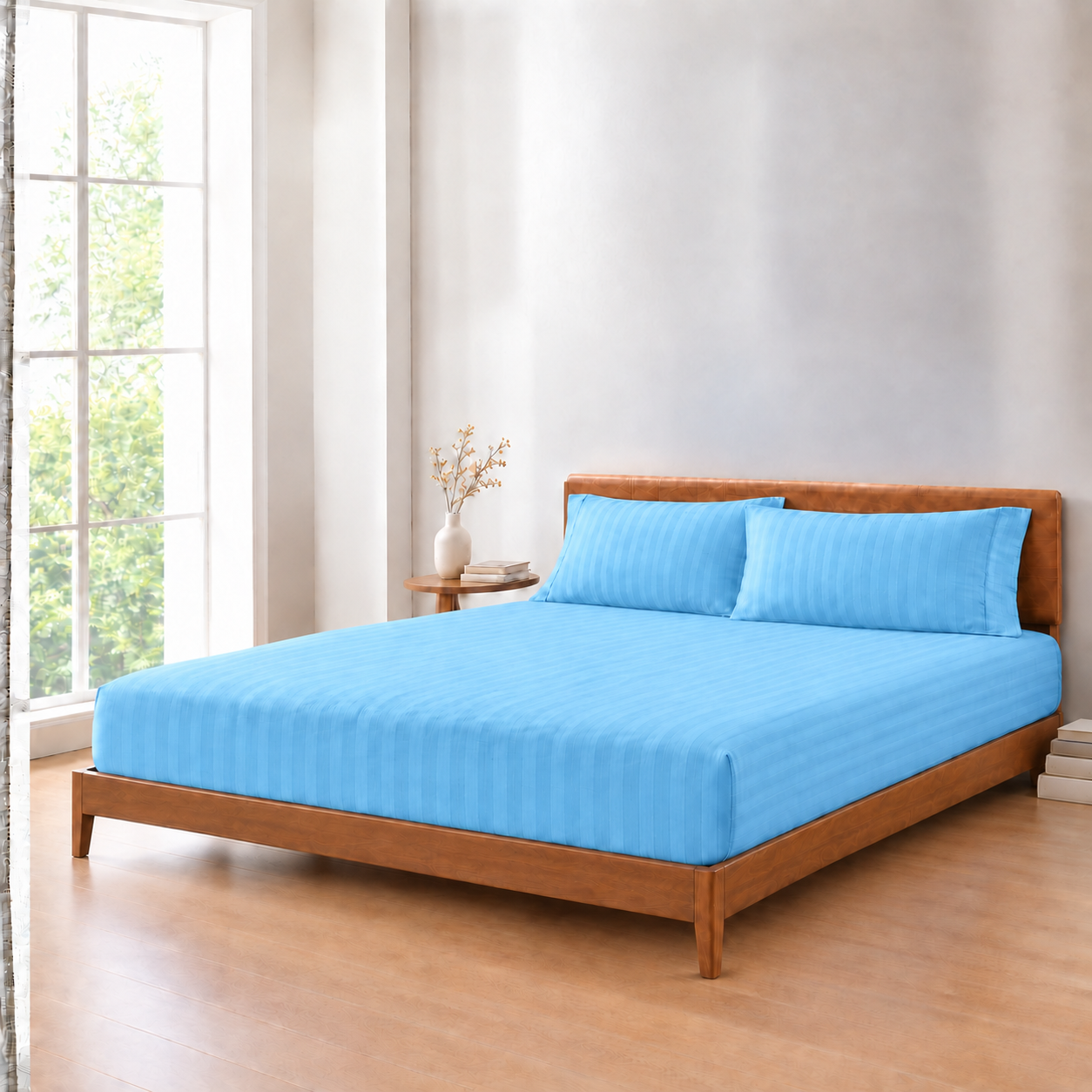
Fibre is a separate question. Both percale and sateen are usually made from cotton, and both can be made well or badly. A good 200–400 TC cotton percale will feel better than a poor 600 TC sateen, so weave and thread count should be judged together, not alone. Delecacy’s sateen sheets, for example, are made in a 210 TC cotton sateen stripe — light enough to breathe, with the smooth sateen finish.
Percale sleeps cooler. Its plain weave lets air move freely through the fabric, and the crisp surface touches less of your skin, so heat escapes more easily. Sateen’s denser satin weave traps a little more warmth, which feels cosy in cool weather but can feel warm on hot nights.
The difference is easy to feel. Slide into a percale bed on a warm evening and the sheet feels cool and dry at first touch. Slide into sateen and the first touch is smooth and neutral — pleasant, but not actively cool. Over the course of the night, percale keeps moving air around you, while sateen holds a thin layer of warmth close to the body.
Thread count matters here too. A very high thread count sateen (500–600 TC) is denser and warmer than a light 210–300 TC sateen. If you like sateen but sleep warm, pick the lightest sateen you can find — a 210 TC sateen stripe, such as the Selene 210 TC Sateen Stripe Bedsheet, gives you the smooth feel without the heavy warmth of a high-count sateen.
Percale feels crisp, light and matte — like a freshly pressed cotton shirt. Sateen feels smooth, soft and slightly silky, with a gentle sheen that catches the light.
Percale has a dry, airy touch. Some people describe it as crunchy when new; it softens with every wash but keeps its crisp character. Sateen has a fluid drape — it falls in soft folds and feels cool and slick against the skin, closer to the feel of a silk scarf than a cotton shirt.
Neither feel is better in itself; it is a matter of taste. People who like a fresh, hotel-bed feeling usually prefer percale. People who like to slide into bed and feel the sheet glide usually prefer sateen. If you cannot decide, think about the shirt you reach for most often: if it is a crisp cotton shirt, you are a percale person; if it is a soft, fluid blouse, you are a sateen person.
Percale usually lasts longer. Its tight plain weave resists pilling and holds its shape through many washes. Sateen’s floating surface threads can snag and pill sooner, so it needs gentler handling.
With regular use and normal washing, a good percale sheet set lasts around 3–5 years before it starts to thin. A sateen set typically lasts 2–4 years — still a long life, but the surface will show wear sooner, especially at the fold lines and where feet rub at the bottom of the bed.
Care makes the biggest difference. Wash both weaves at 30–40°C on a gentle cycle with a mild detergent, and the lifespan gap narrows. Rough handling — hot washes, harsh detergents, high-heat drying — shortens the life of sateen first, because its surface threads take the damage.
Percale is the better pick for hot sleepers. It breathes well, feels cool on first contact and does not cling when you perspire. A light 200–400 TC cotton percale is a good starting point.
Hot sleepers should also look at the rest of the bed: a light duvet, a breathable mattress protector and a room that cools down at night all matter as much as the sheet. But the sheet is the layer touching your skin, so it is the first thing to get right. Percale’s open weave is the closest a cotton sheet gets to feeling like a breeze.
If your heart is set on sateen, choose the lightest option available. The Nivara 210 TC Sateen Stripe Bedsheet is a 210 TC sateen — light enough that it stays comfortable on warm nights, while still giving you the smooth sateen feel. Pair it with a light duvet and you get most of the sateen comfort without the heat build-up.
Sateen is the better pick for cold nights. Its denser weave and smooth surface hold a little warmth, and it pairs well with a heavier duvet. Percale can feel cool at first touch in winter, though it warms up quickly once you are under the covers.
In winter, the sheet’s job changes: instead of letting heat out, it should keep a thin layer of warmth close to you. Sateen does this naturally. Add a warm duvet and a sateen flat sheet becomes part of a cosy layering system, rather than the cool layer you want in summer.
Percale is not unusable in winter — once you have been in bed a few minutes, your body heat warms it up. But the first touch on a cold night is noticeably cooler than sateen. If your bedroom gets cold, sateen is the more comfortable choice from the moment you get in.
Wash both at 30–40°C on a gentle cycle with a mild detergent, and dry them on a line or on low heat. Percale tolerates regular washing well; sateen benefits from a gentler cycle and being turned inside out.
A few habits keep both weaves looking good. Skip fabric softener — it coats the cotton fibres and reduces breathability. Wash sheets on their own or with similar light items, so zips and hooks cannot snag the surface. Shake the sheet out before hanging it to dry, and take it down as soon as it is dry so it does not sit creased in the sun.
Percale wrinkles more than sateen, which is part of its relaxed character. If you like a crisp look, iron percale on a medium heat while it is still slightly damp. Sateen needs less ironing — hang it straight and most creases fall out on their own. Iron sateen on a low heat and on the reverse side if you want to protect the sheen.
The short answer: choose percale if you sleep hot and like a crisp feel, and sateen if you like a smooth, silky feel and sleep cool. Most people are happy with either once the weight is right — light for warm sleepers, a little heavier for cold sleepers.
Both weaves have earned their place in the bedroom. Percale wins on coolness and durability; sateen wins on smoothness and warmth. Pick the one that matches how you sleep, wash it gently at 30–40°C, and either will serve you well for years. Browse the full Bedsheets collection to compare the current sateen stripe designs and find the colour that suits your room.
| Feature | Percale | Sateen |
|---|---|---|
| Weave | Plain, one-over-one | Satin, threads float on the surface |
| Feel | Crisp, light, matte | Smooth, soft, slight sheen |
| Look | Matte, relaxed | Soft shine, elegant drape |
| Breathability | High — air moves freely | Moderate — denser weave |
| Warmth | Cooler, lets heat escape | Warmer, holds heat close |
| Wrinkles | Wrinkles more | Wrinkles less |
| Durability | 3–5 years, resists pilling | 2–4 years, can pill sooner |
| Best for | Hot sleepers, summer | Cold nights, silky feel |
Percale is better for summer. Its open plain weave lets air circulate and feels cool at first touch, while sateen’s denser weave holds more warmth. If you sleep hot, a light 200–400 TC percale is the safest summer pick.
Sateen feels similar to satin — smooth with a soft sheen — but it is usually made from cotton rather than silk or polyester. You get the silky touch with the breathability and easy washing of cotton.
Yes. Percale softens with every wash while keeping its crisp character. The first few washes make the biggest difference, so a new percale sheet that feels firm at first will relax into a comfortable, lived-in feel.
Yes. A common combination is a percale fitted sheet with a sateen flat sheet or pillowcases — the cool percale against the mattress and the smooth sateen where your skin touches the top layer. It is an easy way to try both weaves before committing to a full set.