



The best bedsheet materials depend on how you sleep. Cotton suits most sleepers, bamboo feels cooler and smoother for hot sleepers, and linen offers a relaxed, airy texture that softens with every wash. All three make good sheets — the right choice comes
down to feel, climate and how much care you are happy to give.
Cotton has been the default bedsheet material for generations, and the reasons are practical rather than fashionable. It is soft against the skin, absorbs moisture well, and stands up to regular washing without losing its shape. A good cotton sheet feels crisp when new and grows softer over months of use, which is why so many households return to it.
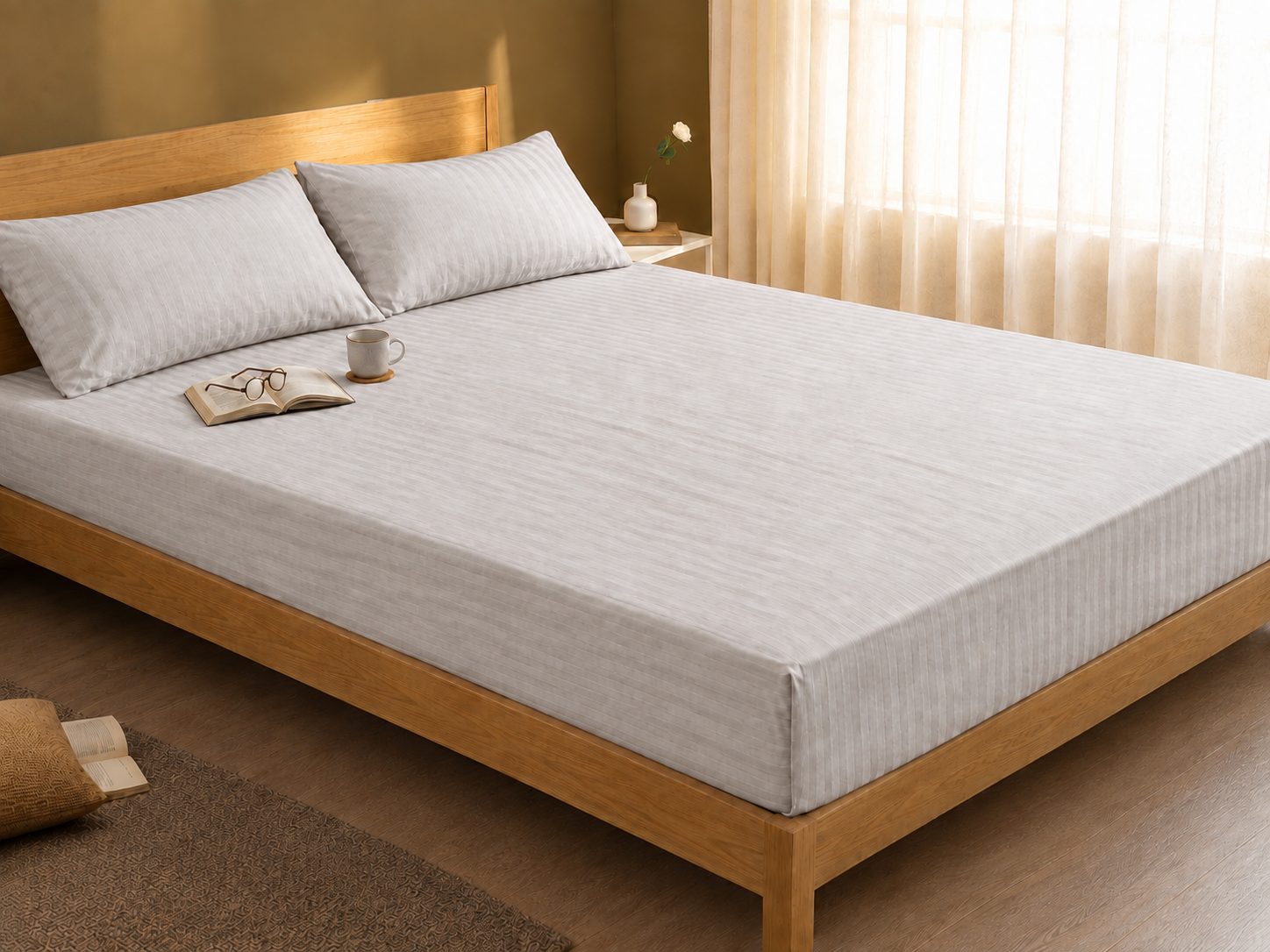
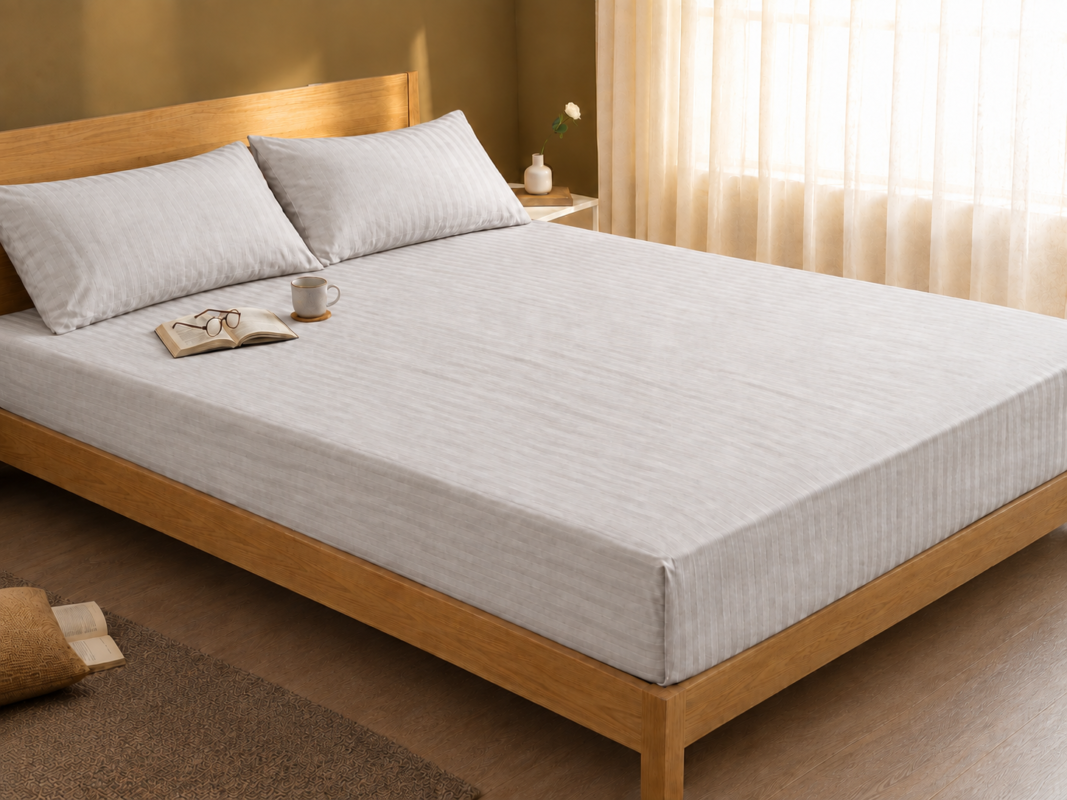
The weave matters as much as the fibre. Percale cotton feels cool and matte, with a crisp, hotel-style finish, while sateen cotton — the weave used in Delecacy’s 210 TC sateen stripe bedsheets — has a smooth, lightly lustrous surface that feels silkier to the touch. Both are cotton; the difference is how the threads are woven.
Thread count also plays a part. For cotton, 200 to 400 thread count covers most needs: 200 TC feels light and breathable, 300 TC feels denser and smoother, and 400 TC feels rich without becoming heavy. Above 400 TC, extra threads add weight faster than comfort, so a higher number is not automatically better.
Bamboo sheets are made from bamboo pulp processed into a soft viscose fibre, and their main appeal is how they feel: smooth, cool and slightly silky, closer to sateen than to crisp percale. If you tend to overheat at night, bamboo is often the first material worth trying.
Bamboo fibres absorb moisture well and release it quickly, which helps the sheet feel dry through the night. The fabric drapes closely rather than bunching, and it resists creasing better than linen, so the bed looks tidier in the morning. Bamboo sheets usually need gentler care than cotton — a cool 30°C wash and no harsh detergents keep the fibres smooth.
One point to check before buying is the blend. Many bamboo sheets are pure bamboo viscose, while others mix bamboo with cotton for extra strength. Either can work well; the label will tell you which you are buying.
Linen is woven from flax fibres, and it feels different from both cotton and bamboo. It has a textured, slightly crisp hand at first, with a relaxed, lived-in look that suits bedrooms styled for comfort rather than formality. Linen is also one of the most breathable sheet fabrics, which is why it is popular in warm climates.
The best-known quality of linen is that it improves with use. Each wash softens the fibres, so a linen sheet that feels firm in its first month can feel beautifully supple by its sixth. Linen also absorbs moisture without feeling damp, and it dries faster than cotton, which helps in humid weather.
Linen does wrinkle more than cotton or bamboo. If a perfectly smooth bed matters to you, linen will need more pressing; if you like a relaxed look, the wrinkles are part of its charm. Linen sheets are usually the most expensive of the three materials, and they reward gentle washing at 40°C or below.
For hot sleepers, breathability and moisture handling matter more than thread count. Bamboo usually wins here: its fibres wick moisture away from the skin and the fabric stays cool to the touch, even on warm nights. A light bamboo sheet in the 300–400 TC range is a strong starting point.
Cotton percale is the next best option. Its plain, open weave lets air move through the fabric, and it feels crisp rather than clingy. Avoid heavy sateen weaves if you sleep hot — the denser weave traps more warmth, however soft it feels.
Linen also sleeps cool and suits hot sleepers who like its texture, but its higher price and wrinkled finish put some people off. Whichever material you choose, pair it with a light duvet or a single flat sheet in summer, and keep the bedroom ventilated; the sheet alone cannot fix a stuffy room.
Care is where the three materials differ most in daily life. Cotton is the easiest: machine wash at 30–40°C, tumble dry on low or line dry, and iron if you like a crisp finish. It tolerates regular washing and comes out of the dryer ready to use.
Bamboo needs a gentler routine. Wash at 30°C on a gentle cycle, skip fabric softener (it coats the fibres and reduces absorbency), and line dry or tumble dry on the lowest heat. High heat is bamboo’s main enemy — it can make the fibres brittle over time.
Linen sits in between. Wash at 40°C or below, avoid bleach, and line dry when you can; linen dries quickly and needs little ironing if you smooth it while damp. All three materials last longer when you rotate two sets of sheets, so no single set is washed every week.
Thread count is only meaningful within one material, and the sweet spot differs. For cotton, 200–400 TC covers everyday comfort, with 210 TC sateen offering a good balance of smoothness and breathability — the weight used in Delecacy’s Selene 210 TC Sateen Stripe Bedsheet and Nivara 210 TC Sateen Stripe Bedsheet. For bamboo, 300–500 TC feels best; below 300 TC the fabric can feel thin, above 500 TC it can feel heavy. For linen, thread count is rarely quoted — linen quality is judged by fibre length and weave density instead, so a thread-count number on a linen label tells you very little.
A useful rule: choose the material first, then the thread count. A 300 TC cotton percale sheet will sleep cooler than a 600 TC cotton sateen sheet, and a 400 TC bamboo sheet will feel smoother than an 800 TC cotton sheet that is thick and stiff. Fibre and weave decide the feel; thread count only refines it.
Start with your sleep. If you sleep hot, try bamboo or cotton percale. If you like a soft, smooth feel and easy care, cotton sateen is the safe choice. If you want a natural, airy texture that improves with age and you do not mind wrinkles, linen is worth the investment.
Then think about your climate and your laundry routine. Bamboo and linen both suit warm, humid weather, while cotton suits every season. If you wash sheets weekly and want the simplest routine, cotton wins. If you line-dry and like low-maintenance fabrics, linen is forgiving.
Finally, buy one set before committing to a full household swap. Sleep on it for two weeks, wash it twice, and see how it feels after washing — not just on the first night. A sheet’s real character shows after its first few washes, and a two-week trial tells you more than any label can. Before you decide, browse the Bedsheets collection to compare the available options.
| Material | Feel | Sleep temperature | Care effort | Best for |
|---|---|---|---|---|
| Cotton | Crisp or smooth, softens with use | Neutral to cool (percale) | Easy — machine wash 30–40°C | Everyday use, all seasons |
| Bamboo | Smooth, silky, cool to touch | Cool — best for hot sleepers | Gentle — 30°C, no softener | Hot sleepers, sensitive skin |
| Linen | Textured, airy, softens over time | Cool and breathable | Moderate — 40°C, line dry | Warm climates, relaxed styling |
Cotton usually lasts longest with regular washing, holding its shape for years at 200–400 TC. Linen can last even longer if cared for gently, while bamboo lasts well but needs cooler washes and low heat to stay smooth.
Yes, in most cases. Bamboo fibres wick moisture and feel cool to the touch, while cotton percale is the coolest cotton option. Heavy cotton sateen feels warmer than either.
Yes. Linen softens with every wash as the flax fibres relax, so a linen sheet feels noticeably softer after a few months than it did on the first night.
Yes. A common combination is a cotton fitted sheet with a linen flat sheet or duvet cover, giving you cotton’s easy care underneath and linen’s airy feel on top.
May your home be filled with light
DELECACY
Tap to light the diya