
Choose a bedsheet colour by matching it to your room and your habits: pale shades such as white, ivory and soft grey make small bedrooms feel larger and brighter, while deeper tones such as navy, forest green and charcoal suit larger rooms and hide marks better. Pick a colour you enjoy seeing every night, in a 210 thread count sateen weave that feels smooth against the skin.
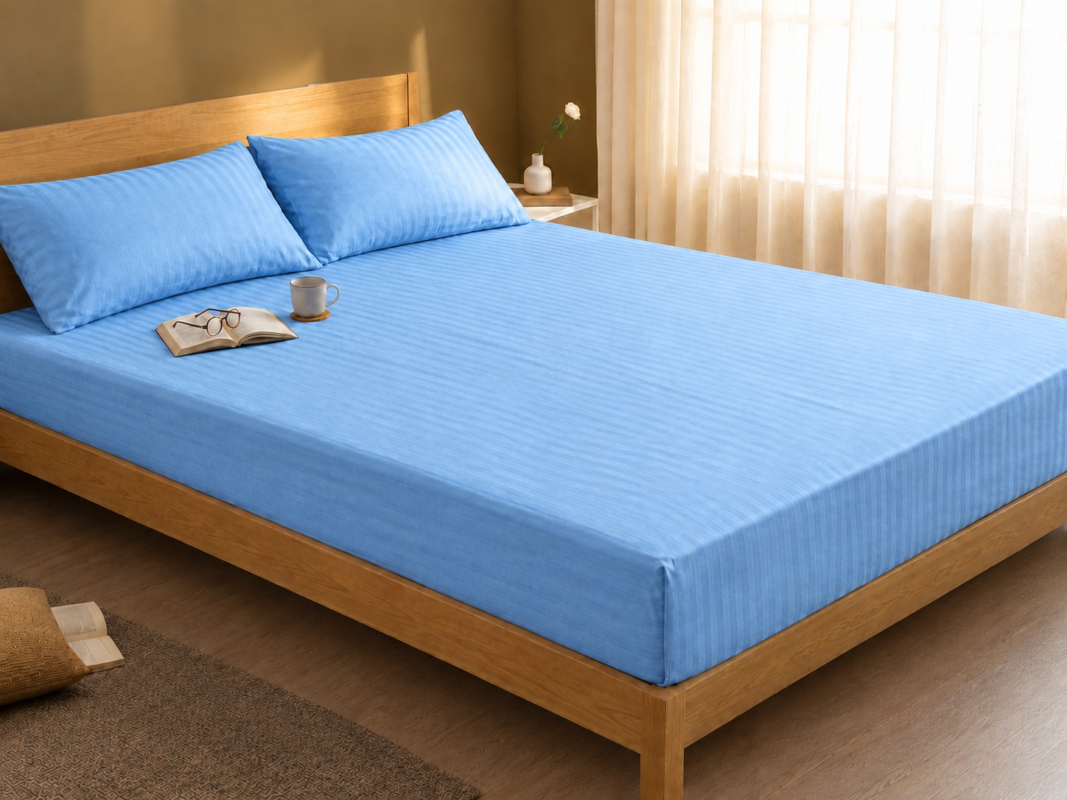
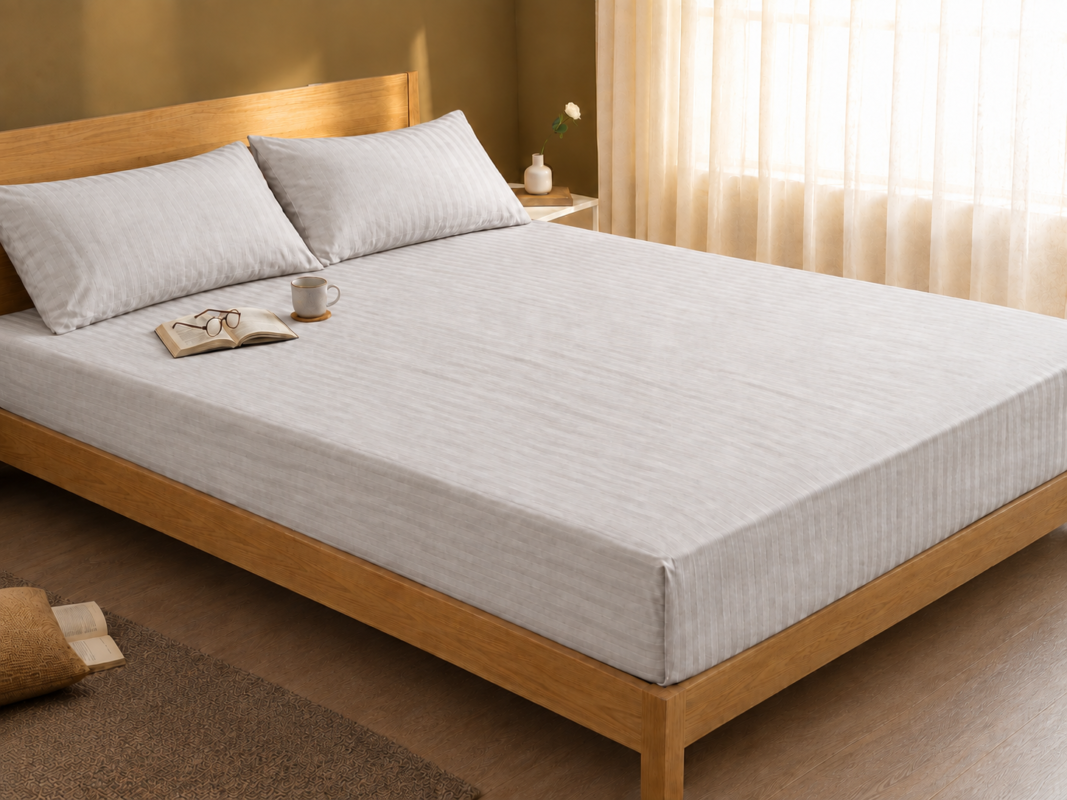
Pale colours reflect more light, so white, ivory, pale grey and soft blush make a small bedroom feel more open. A white or ivory sheet also makes the bed look crisp against a coloured wall, which draws the eye to the bed rather than to the room’s edges. If your bedroom has one small window, a pale sheet is the simplest way to lift the whole room. Keep the pillowcases in the same pale family so the bed reads as one calm surface, and let a darker throw or cushion add the contrast instead.
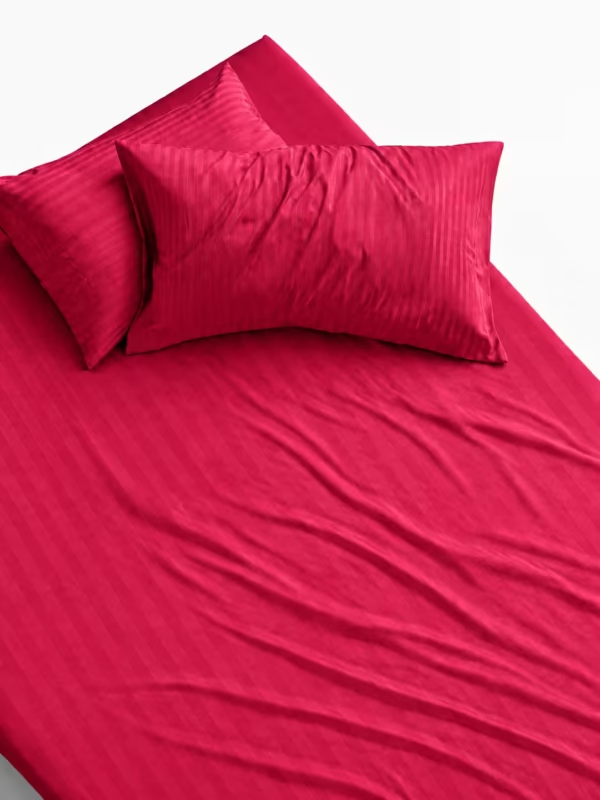
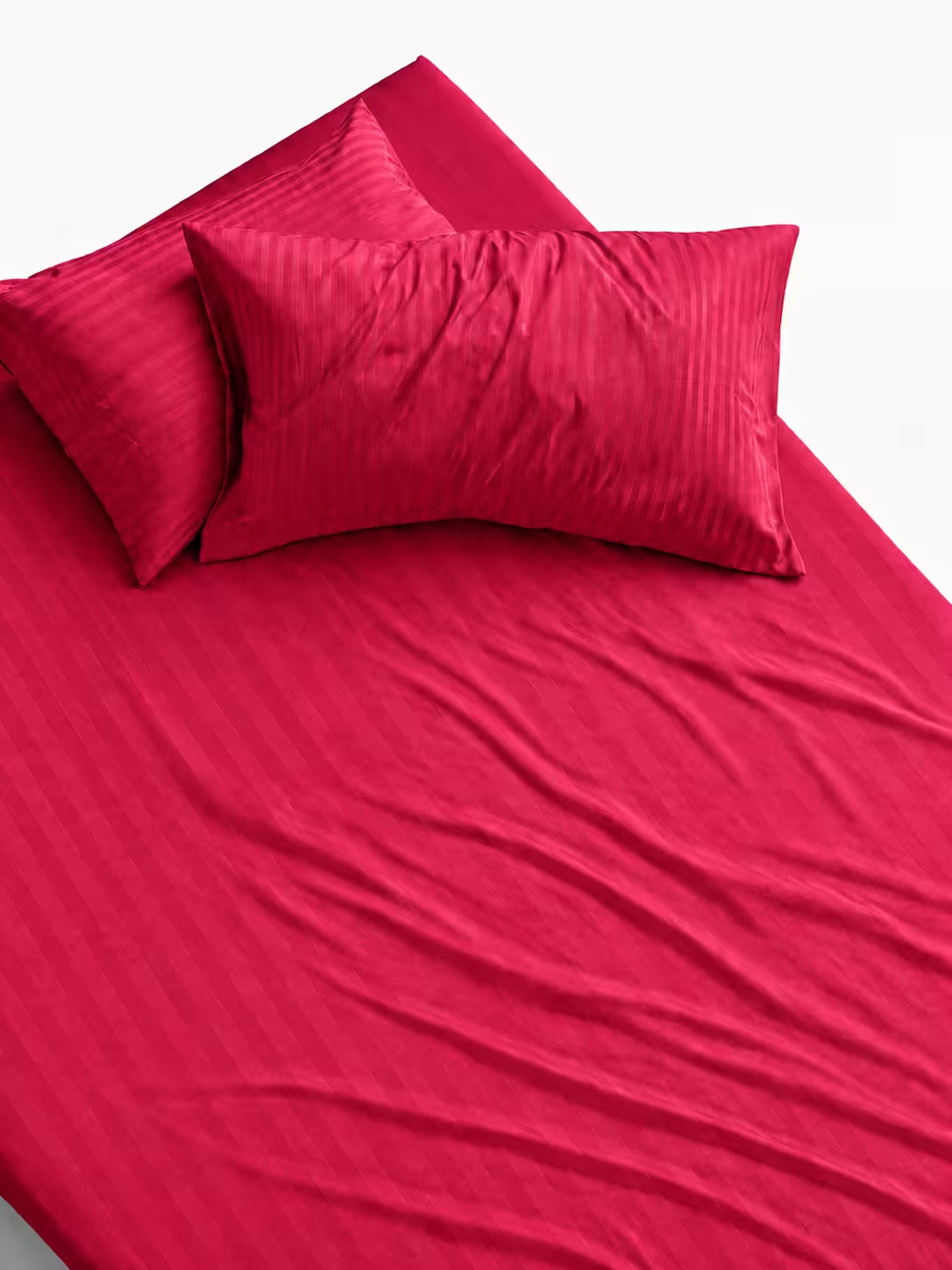
Soft, muted colours are the easiest to fall asleep with: warm white, light grey, sage green, dusty blue and soft lavender all feel calm in low evening light. Strong, bright colours such as scarlet red or vivid orange can feel stimulating at bedtime, so they work better as an accent cushion than as the full sheet. Navy and charcoal are exceptions — deep, muted and restful, they suit people who like a darker, cocoon-like bedroom. The best colour for sleep is one that feels quiet to you at 10 pm, not one that looks exciting in a shop at midday.
Start with the largest fixed colours in the room: the wall colour, the floor and the headboard. A sheet that sits one or two shades lighter than the wall usually looks balanced, while a sheet in a contrasting tone can work when the room is otherwise plain. If your walls are white, almost any colour works — try soft blue, sage or blush for warmth, or charcoal for contrast. If your walls are a strong colour, pick a sheet in a pale neutral so the bed does not compete with the wall. Match the sheet to the room’s undertones too: cool greys pair with blue and silver, warm ivory pairs with wood, cream and gold.
Light sheets show marks more easily but look fresh and airy, and they suit rooms with good natural light. Dark sheets hide small marks and stains better, which makes them practical for households with children or pets, but they can make a small room feel heavier and they show lint and dust more clearly. A practical middle ground is a mid-tone sheet — soft grey, sage, dusty blue or muted terracotta — which hides everyday marks while keeping the room bright. If you love white sheets, wash them at 40°C with a mild detergent and dry them out of direct sun to keep them bright.
Mid-tones and patterns hide marks best. Soft grey, sage green, dusty blue and muted taupe disguise small marks far better than pure white, while a subtle stripe or small print hides them better still. Very dark colours hide stains but reveal dust, pet hair and lint, so they need more frequent shaking out. White sheets show every mark, which is why many people keep a white set for guests and a mid-tone set for everyday use. Whatever colour you choose, treat a stain quickly with cold water before washing — hot water can set protein stains such as sweat.
Treat the sheet as the base and the pillows and throw as the accent. A simple rule is 60-30-10: about 60% of the bed in the main sheet colour, 30% in a second colour on the pillowcases or duvet, and 10% in a bold accent on a throw or cushion. A white sheet with sage pillowcases and a terracotta throw is a calm, layered look; a navy sheet with white pillowcases and a mustard cushion is bolder. Keep patterns to one layer — if the sheet is striped, keep the pillowcases plain, and vice versa. This keeps the bed looking styled rather than busy.
Lighter, cooler colours suit warm months: white, pale blue and soft mint feel fresh on hot nights. Deeper, warmer colours suit cold months: charcoal, forest green, burgundy and warm taupe make the bed feel cosy when the room is cold. Many households keep two sets and swap them with the season — a pale set for summer and a deep set for winter. Flannel-weight sheets in winter also hold warmth better, while a light 210 thread count sateen sheet stays cool in summer. The swap takes five minutes and changes the whole feel of the room.
| Colour family | Best for | Watch out for |
|---|---|---|
| White and ivory | Small rooms, fresh look, guest beds | Shows marks; needs regular washing |
| Pale grey and sage | Calm bedrooms, everyday use | Can look flat without an accent |
| Dusty blue | Cool, restful sleep, white walls | Cooler tone; pair with warm wood |
| Navy and charcoal | Large rooms, hiding marks, cosy feel | Shows lint; can darken small rooms |
| Blush and terracotta | Warmth, wood furniture, layered looks | Strong tones; keep to one layer |
| Stripes and small prints | Hiding marks, family bedrooms | Keep pillowcases plain |
Browse the Bedsheets collection, including the Selene 210 TC Sateen Stripe Bedsheet and the Nivara 210 TC Sateen Stripe Bedsheet.
White is the most popular bedsheet colour because it suits every bedroom, looks fresh, and matches any pillowcase or throw. Soft grey and ivory are close behind for people who want a pale sheet that hides marks slightly better.
Yes, very dark sheets can make a small bedroom feel smaller because they absorb light. In a small room, choose a pale or mid-tone sheet and add dark colour through a throw or cushions instead.
White, soft blue, sage and blush all work well with grey walls. For a cool grey wall, pick a cool sheet such as pale blue; for a warm grey wall, pick ivory, blush or warm taupe.
Two or three sets are enough for most households: one pale set, one mid-tone set, and optionally one deep set for winter. Rotating them keeps colours fresher and gives each set a rest between washes.