



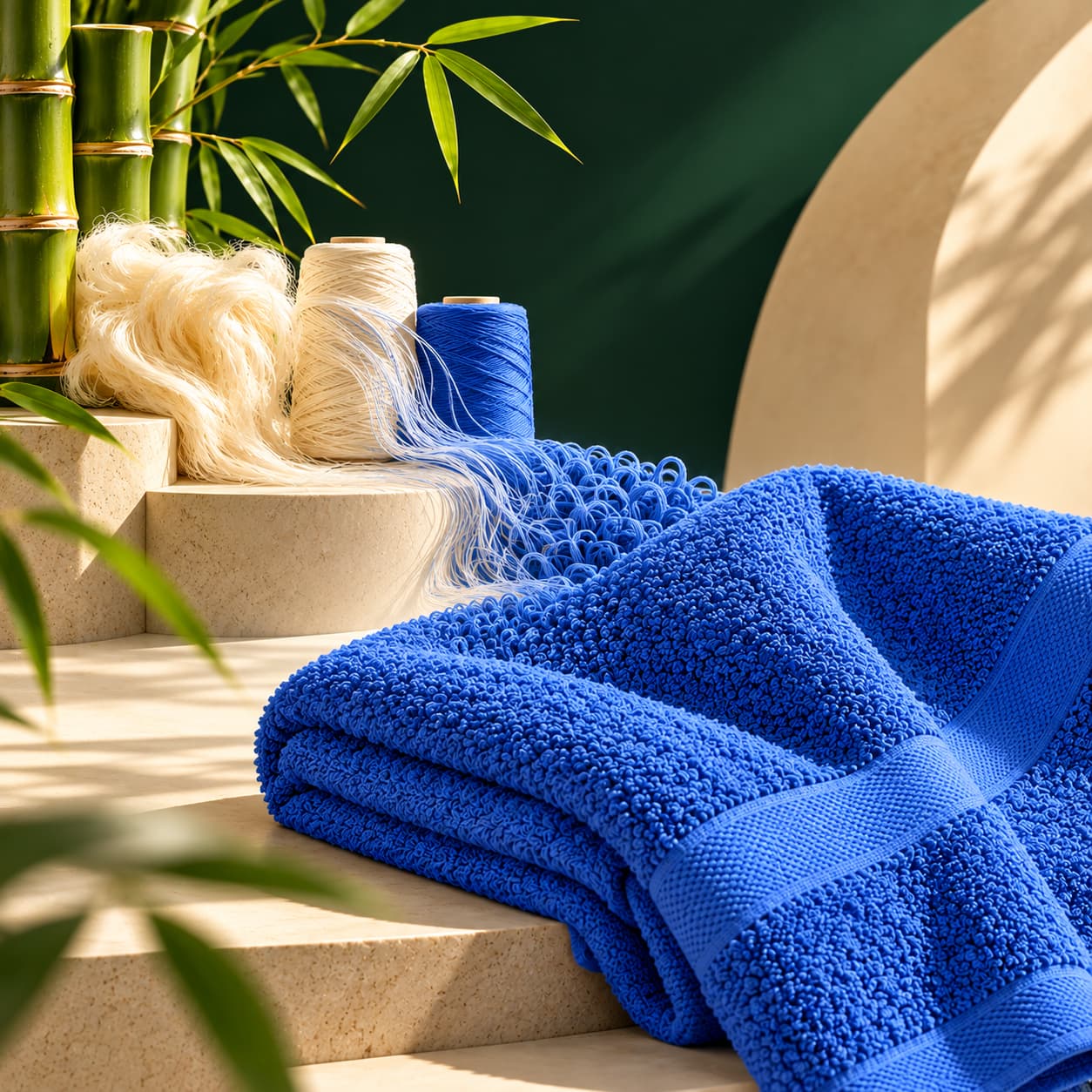
Terry vs non-terry towels differ mainly in surface and drying: a terry towel has raised loops on both sides that soak up water quickly and feel plush, while a non-terry towel has a flat, smooth surface that dries faster and packs lighter. Terry suits everyday baths and wrapping up after a shower; non-terry suits gym bags, travel and quick hand drying. The right choice depends on how you use the towel, not on which type is better overall.
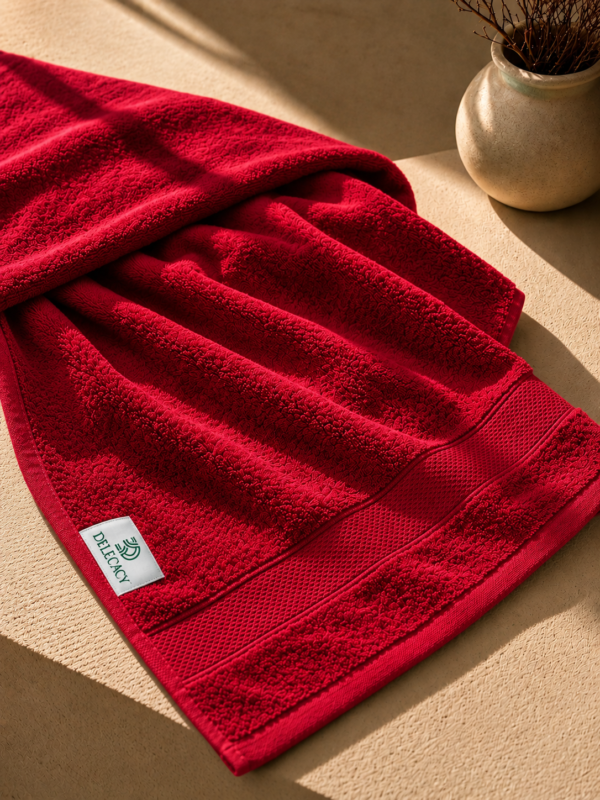
Terry cloth is woven with loops of yarn left uncut on the surface of the fabric. The loops stand up from the base cloth and create the soft, plush pile you recognise on most bath towels. Those loops do the work: each one traps water, so a terry towel can absorb a large amount of moisture quickly and feels warm and cushioned against the skin.
Most bath towels, bath sheets and hand towels sold for home use are terry towels, and they come in a wide range of weights. A typical bath towel in terry weighs around 400 to 700 GSM, with heavier towels feeling thicker and plusher. The loop pile also gives terry towels their familiar texture, which many people find comforting after a hot shower or bath. Terry towels need a little more care than flat towels, because the loops can catch on hooks or jewellery and take longer to dry, but with regular washing they stay soft for years.
A non-terry towel has a flat woven surface with no raised loops. It may use a plain weave or a waffle weave, where small square pockets in the fabric give it a light texture without any pile. Because there are no loops to hold water, a non-terry towel feels thinner and smoother, and it dries noticeably faster than a terry towel of the same size.
Non-terry towels are usually lighter, typically around 250 to 400 GSM for a bath towel, which makes them easy to fold small and pack into a gym bag or suitcase. They are a good pick for hand towels in a busy bathroom, for travel, for the gym, and for anyone who prefers a towel that dries between uses rather than staying damp. They absorb less water per pass than a thick terry towel, so drying off takes a few extra strokes, but they make up for it with speed and lightness.
| Terry towels | Non-terry towels | |
|---|---|---|
| Surface | Raised loops on both sides | Flat woven surface, sometimes waffle texture |
| Feel | Plush, soft and cushioned | Smooth, light and crisp |
| Absorbency | High, soaks up water fast | Moderate, needs a few more passes |
| Drying time | Slower, loops hold moisture | Faster, thin fabric releases water |
| Weight (bath towel) | Around 400 to 700 GSM | Around 250 to 400 GSM |
| Pack size | Bulky, fills a bag quickly | Compact, folds small for travel |
| Best for | Everyday baths, wrapping up after a shower | Gym, travel, guest bathrooms, quick hand drying |
| Care | Needs room to air dry, loops can snag | Easy to wash and quick to dry |
When it comes to drying, terry vs non-terry towels differ clearly: a non-terry towel dries faster, both on your skin and on the rail. The flat weave holds less water, so there is less moisture to evaporate, and air moves through the thin fabric easily. In a well-ventilated bathroom, a non-terry hand towel is often dry within a couple of hours, while a thick terry bath towel can still feel damp the next morning in humid weather. That matters if several people share one bathroom, or if you wash towels less often, because a towel that stays damp for long can develop a stale smell. Terry towels dry faster if you spread them out fully on a wide rail or a heated rail, shake them out before hanging, and keep the bathroom ventilated. If your bathroom has little airflow, a non-terry towel is the safer choice for hand towels that get used many times a day.
Both types can suit sensitive skin, and the deciding factor is texture rather than the towel type itself. A plush terry towel is gentle because the soft loops cushion the skin, so patting dry with a thick terry towel rarely irritates. A non-terry towel has a smoother surface, so there is less friction, which some people with very reactive skin prefer. The rule that matters most is to pat rather than rub, whichever towel you use.
Rubbing with any towel can irritate delicate skin. Wash new towels before first use to remove any finishing residue, use a mild detergent, and skip fabric softener, which coats the fibres and can irritate skin as well as reduce absorbency. If your skin reacts to a towel, try a softer, lighter option in either type before assuming the weave is the problem.
When weighing up terry vs non-terry towels, start with who uses the towel and how often. For the main family bathroom, thick terry bath towels are the comfortable default: they dry you quickly, feel warm, and suit daily showers. For a guest bathroom, a set of non-terry hand towels stays fresh between visits and dries fast after a single use. For the gym or travel, a non-terry towel wins on weight and pack size. Think about storage too: a shelf stacked with bulky terry bath sheets needs more room than the same number of flat towels. Colour is practical as well as decorative: white and pale towels show stains but are easy to keep bright with the right wash routine, while deep colours hide marks but can fade if washed too hot. If you are unsure, buy one of each type and try them for a week; the difference in feel and drying time will tell you which suits your routine. The Delecacy Terry towel range covers the plush everyday option, while the Non-Terry range covers the light, quick-drying option, and both are made to the same size and care standards.
Towel sizes follow a few standard measurements. A hand towel is usually around 50 by 100 centimetres, a bath towel around 70 by 140 centimetres, and a bath sheet around 90 by 150 centimetres. GSM, or grams per square metre, tells you how heavy the fabric is: light towels sit around 300 to 400 GSM, mid-weight towels around 400 to 550 GSM, and thick, plush towels around 550 to 700 GSM. Higher GSM means a thicker, more absorbent towel, but also a slower drying one. Wash towels at 40 degrees Celsius with a mild detergent, and avoid fabric softener, which coats the fibres and reduces absorbency over time. Shake each towel out before hanging it to dry, and tumble dry on low heat or line dry in fresh air. Replace a towel when its loops flatten, its edges fray, or it stops absorbing well despite correct washing, usually after one to two years of regular use.
Wash new towels before first use, and wash bath towels after three to four uses, hand towels after two to three days. Use 40 degree water and a mild detergent, and skip fabric softener and dryer sheets. Wash towels separately from clothes with zips or hooks, which can snag terry loops. Shake terry towels out before drying so the loops stand up again, and give non-terry towels a good shake too so the weave opens up. Tumble dry on low heat or hang them spread out in moving air; never leave a damp towel bunched up, since that is what causes stale smells. If a towel starts to smell despite regular washing, run a hot wash at 60 degrees with no detergent, then dry it fully before use. Whichever side of the terry vs non-terry towels choice you pick, washing and drying it well keeps it working at its best.
Yes. The raised loops on a terry towel trap more water per pass, so it dries you faster. A non-terry towel absorbs less per pass but dries itself faster afterwards.
Yes. A non-terry towel is thinner and holds less water, so it dries on the rail much faster than a thick terry towel, which makes it a good choice for humid bathrooms and gym bags.
A non-terry towel is usually best for the gym because it is light, folds small, and dries quickly between uses. A small terry hand towel also works if you prefer a plusher feel.
No. Fabric softener coats the fibres and reduces absorbency, so towels feel less effective over time. Use a mild detergent and tumble dry on low heat instead.
May your home be filled with light
DELECACY
Tap to light the diya